Envelopes
Envelopes are used to organize our money. If we've allocated some funds to an envelope, it means we've given them a purpose before they're spent. Interestingly, it doesn't matter where this money actually is, whether in a wallet or in a high-interest account. What matters is that this money has a specific goal and purpose.
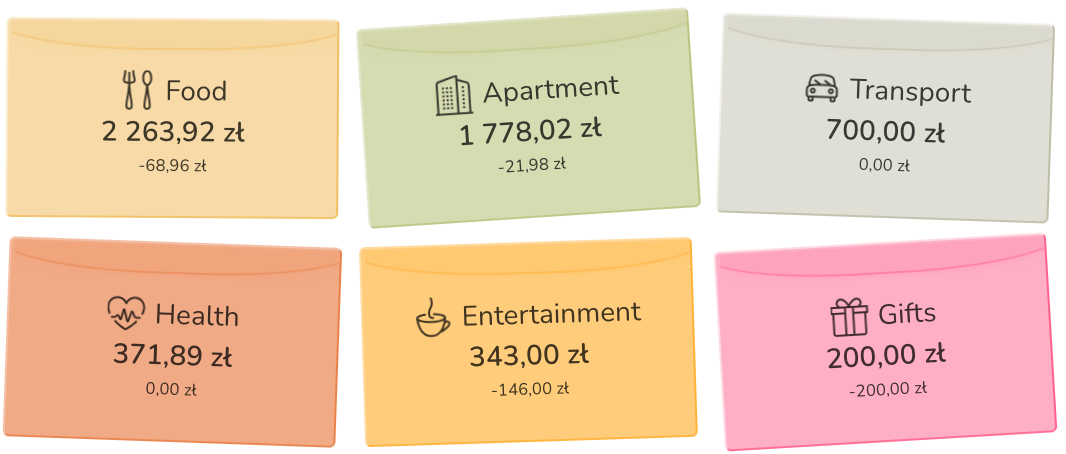
We distinguish three types of envelopes:
Envelopes we spend from regularly - we use these envelopes on a daily basis and most often spend exactly as much as we put into them at the beginning. If some pennies remain, we simply pull out those leftovers and move them to another envelope or to the next month. Examples: Food, Rent, Fuel, Entertainment, Loan repayment.
Envelopes for irregular expenses - in these envelopes we both save and spend. Expenses from these envelopes usually appear less than once a month, but we add to them to be prepared for various events.
Examples:
Health - we don't get sick every month, but it's worth having some money reserved when there's a need to go to the pharmacy or dentist.
Car - car wash, inspection, insurance, light bulb replacement, minor breakdowns.
Unused money in a given month will be available in subsequent ones.Envelopes where we save - these envelopes serve to make sure we don't spend this money on other things. As a rule, we don't spend from these envelopes. For example, in the Emergency fund envelope we reserve money for unexpected events. If an emergency situation occurs, we move part of this money to another envelope - e.g., the car engine broke down and several thousand zlotys are needed for repair - move money from the emergency fund to the Car envelope to cover the engine replacement. In the following months, however, rebuild the Emergency fund.
Envelope Groups
Groups are only meant to make it easier for us to find our way around envelopes and focus on a selected part of the budget. If we have few envelopes, we can simply create a My envelopes group and keep all our envelopes there.
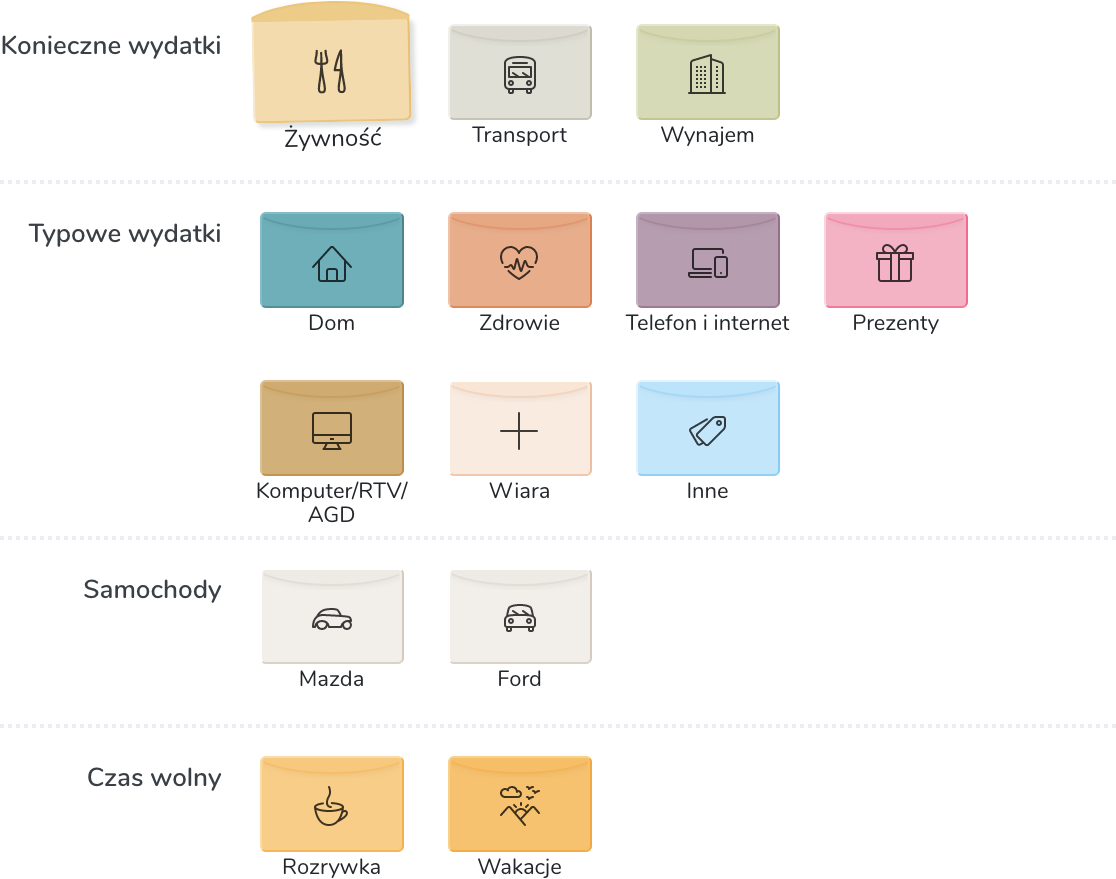
How many envelopes should we create?
It's difficult to answer this question unambiguously. As many as seems reasonable to you, but remember that the more you have, the harder it is to manage them later.
Therefore, before you create too many envelopes, consider whether all these expenses can't be assigned to one envelope.
For example, let's take this set:

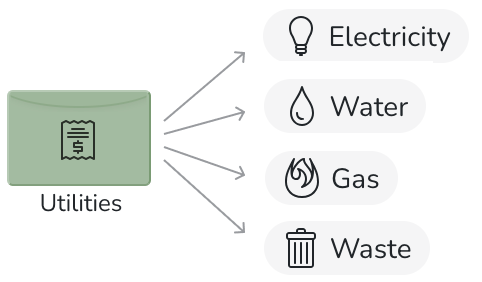
The above envelopes can be combined into one called Utilities, while using categories to organize expenses within that envelope.